
The Right Diagnosis Starts with the Right Specialty
Don't get lost in complicated medical processes. Find out the right department to go to based on your symptoms right away.
Oral and Dental Health
Modern diagnostic and treatment methods for all your oral and dental problems, including tooth decay, gum disease, implant surgery, root canal treatment, orthodontic braces, smile design, and jaw surgery.
Emergency and First Aid
What to do at home and in the hospital in life-threatening situations where time is of the essence, such as poisoning, burns, cuts, high fever, suspected heart attack, and trauma.
Diagnostic and Imaging Unit
Detailed information on radiological imaging processes such as MRI, Tomography, Ultrasound, and X-Ray, as well as biochemistry, hormone, and hemogram blood tests.
The Right Branch Guide
Neurology
Conditions such as headache, dizziness, forgetfulness, and risk of stroke.
Cardiology
Chest pain, palpitations, blood pressure, and cardiovascular health.
Orthopedics
Herniated discs in the neck and lower back, fractures, dislocations, and joint pain.
Gynecology
Pregnancy monitoring, childbirth, cysts, and menstrual irregularities.
Pediatrics
Febrile Illnesses, Developmental Monitoring, Vaccinations, and Allergies
Ear, Nose, and Throat
Sinusitis, Hearing Loss, Vertigo, and Throat Infections
Internal Medicine
Abdominal Pain, Stomach, Thyroid, Diabetes, and General Check-ups
Dermatology
Acne, eczema, itching, moles, and hair loss.
Ophthalmology
Vision impairment, cataract, stye, and eye examination.
General Surgery
Appendicitis, hernia, hemorrhoids, gallbladder, and surgeries.
Urology
Kidney stones, urinary tract, prostate, and infertility treatment.
Pulmonology
Cough, shortness of breath, asthma, COPD, and pneumonia.
About
Your Compass on Your Health Journey

🩺Precise Guidance It can be difficult to determine whether the cause of your headache is Neurology or ENT. By analyzing your symptoms, we direct you straight to the specialist you need to see, preventing you from knocking on the wrong doors.
🔬 Understanding Lab Results We explain what the abbreviations (Glucose, Ferritin, TSH, etc.) and reference values on those complex lab reports mean in plain language that everyone can understand, without getting bogged down in medical jargon.
⏳ Save Time and Energy We are ending the era of searching for doctors in hospitals through trial and error. By ensuring you know the right medical department for your symptoms before making an appointment, we shorten the path to treatment.
🛡️ Trusted Source of Information We help you make informed decisions about your health by providing content that is completely based on medical facts and supported by expert opinions, free from the information pollution on the internet.
📋 Pre-Appointment Preparation We explain not only which doctor to see, but also how to prepare for your visit to that department. By answering questions such as “Should I arrive on an empty stomach?” and “What documents should I bring?”, we ensure your examination process is complete and efficient.
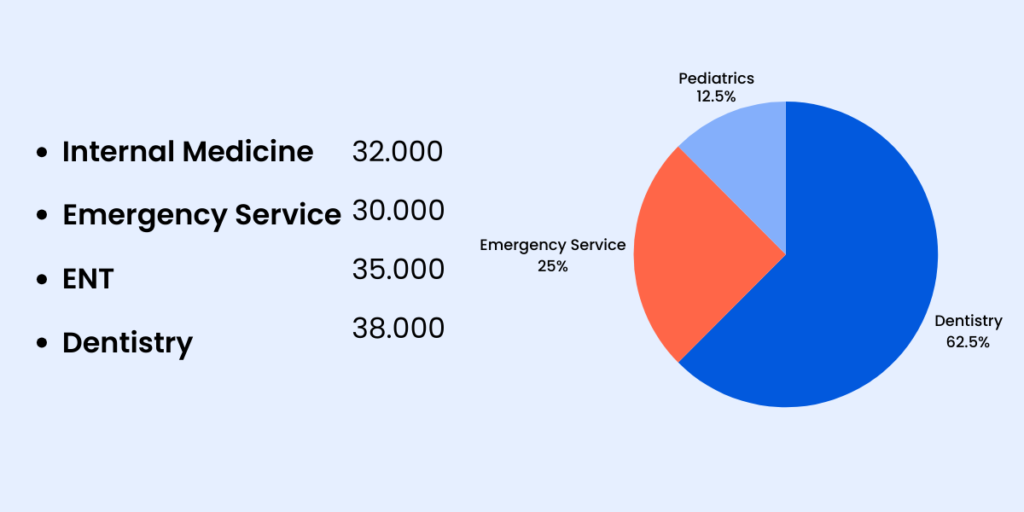
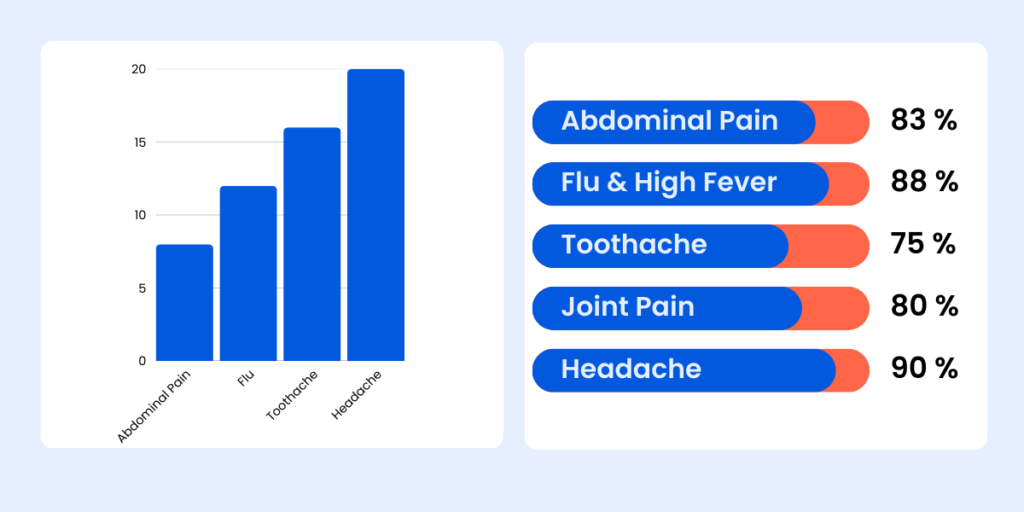
Most Frequently Consulted Departments and Complaint Distribution
Medical Diagnosis and Examination Guide
Detailed information on all methods used in the diagnosis of diseases, from laboratory values to radiological imaging.
Glucose
Blood Sugar
Diabetes screening, hypoglycemia, and energy metabolism control.
Hemogram
Complete Blood Count
Evaluation of anemia, presence of infection, and the overall status of blood cells.
TSH / T3 / T4
Thyroid Hormones
Goiter, rapid weight gain or loss, palpitations, and thyroid gland activity.
HbA1c
3-Month Average Blood Sugar
The average blood sugar level over the last three months in diabetic patients and treatment monitoring.
Urea / Creatinine
Kidney Function
Assessment of kidney filtration capacity, protein leakage, and overall kidney health.
ALT / AST
Liver Enzymes
Detection of fatty liver disease, hepatitis risk, and liver damage.
Ferritin / B12
Vitamin Stores
Causes of fatigue, forgetfulness, hair loss, and iron deficiency.
CRP / ESR
Infection and Inflammation
Detection of general inflammation in the body, rheumatic conditions, and infections.
MRI
Magnetic Resonance
Detailed imaging of the brain, cervical disc herniation, lumbar disc herniation, joints, and soft tissues.
Computed Tomography (CT Scan)
Cross-Sectional Imaging
Examination of the lungs, bone structures, and internal organs in millimeter-thick sections.
Ultrasound
Sound Waves
Abdominal organs, thyroid, kidney stones, pregnancy monitoring, and cyst evaluation.
Digital X-Ray
X-Ray
Bone fractures, dislocations, chest X-rays, and skeletal system screening.
Color Doppler
Vascular Ultrasound
Varicose veins, vascular blockages, blood clots, and measurement of blood flow velocity.
ECG (Electrocardiography)
Heart Rhythm
Heart attack risk, arrhythmias, and recording of the heart’s electrical activity.
Bone Densitometry
Bone Measurement
Assessment of osteoporosis risk and analysis of bone density.
Mammography
Breast Health
Early detection of breast cancer and radiological monitoring of masses and cysts.
Did You Know These About Your Health?
Explore our detailed blog guides for everything you want to know, from disease symptoms to treatment methods.
From You
They Found the Right Specialist
Frequently Asked Questions
Do I absolutely need to be fasting when I go to give a blood sample?
As a general rule, most blood tests (especially sugar and cholesterol) require 8-12 hours of fasting. Eating can confuse the results; however, unless your doctor tells you otherwise, there is no harm in drinking water.
Should I take antibiotics immediately when I have the flu or a cold?
No, the flu and colds are caused by viruses; antibiotics only kill bacteria. Unless your doctor specifically identifies a bacterial infection, taking antibiotics won't cure you and may even weaken your immune system.
I constantly feel tired and weak, which department should I go to?
For these types of general complaints, the first place you should go is the Internal Medicine (Dahiliye) clinic. Your doctor will determine the cause of your fatigue through blood tests (iron, B12, thyroid, etc.) and will prescribe treatment.
In what situations should you go to the Emergency Room?
You should only seek medical attention in life-threatening situations (suspected heart attack, shortness of breath, severe trauma, seizures). For long-standing pain or mild colds, it's best to make an appointment at a clinic.
Should I see a doctor (check-up) even if I have no complaints?
Yes, you should have a general health check-up once a year to take preventative measures before diseases show symptoms. Early diagnosis makes treating insidious diseases like diabetes and hypertension much easier.
Is there anything on your mind?
Couldn't find the symptom or test result you were looking for on our website? Please feel free to contact us with any suggestions or questions.